This week at Omnibus Readers

There was no one big button this week. It was a pile of smaller work instead — pages that show up quicker, reading-order tools that get out of your way, catalog data that's a little more trustworthy, and some behind-the-scenes plumbing you'll never look at but will feel.
Pages show up quicker
A few of the slower pages were doing too much before they put anything on screen. Issue pages, profiles, shelves, the social feed, and the heavier admin screens now hand you the useful part first and fill in the rest afterward, instead of making you wait for the whole thing at once.
Some of that was just getting work off the request entirely. Sitemap generation, search logging, reader-discovery refreshes, and a couple of admin diagnostics used to run while you sat there — now they happen in the background, where they belong.
Reading orders are easier to actually use

Reading orders got worked on from both ends, reading and editing. Long lists don't hold up the rest of the page like they used to, text rows can carry a plain "read up to here" note, and the source and recommendation blurbs now read in the order's own voice instead of looking bolted on. In the editor, the settings panel stopped wrestling with the page around it and finally behaves like a proper little tool.
The catalog got a bit cleaner

Most of the catalog work came down to trusting the right facts. Omnibus detection got pickier about standard-trim books, trade-paperback suffixes, "new printing" wording, and dimensions that disagree between sources — so fewer editions end up mislabeled or shown twice.
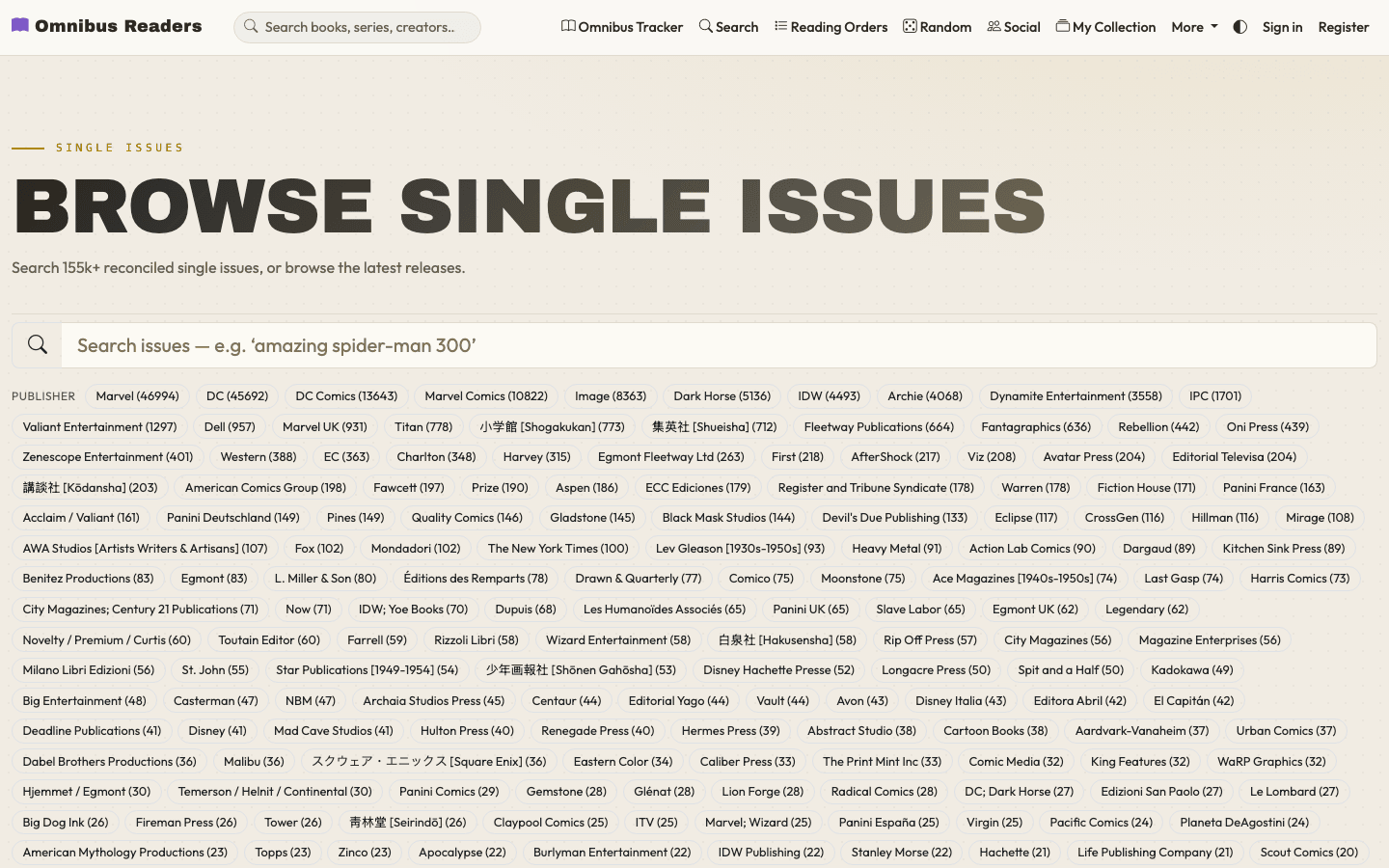
On the issue side, the coverage tools got better at saying why an edition isn't fully mapped yet, and the daily graph sync was fixed so it adds new links without quietly dropping the ones already there. There was also cleanup around content extraction and review: keeping ISBNs in shelf exports, holding candidate identity steady across rebuilds, and checking issue links before anyone approves them.
Community and moderation
The community side kept inching toward its newer storage, and the line between comments, forum threads, and social posts is getting sharper so each one has a clear job. New readers now get a nudge to pick a display name, which makes the jump from "fresh account" to "someone you recognize" a lot shorter. On the admin end, user lists picked up join-date sorting and detail, and the permissions page no longer chokes on long lists.
Under the hood
The parts you can't see got the most attention. There's a real background-job system now, so heavier tasks get queued, tracked, retried, and run by a worker instead of pinning a page load open. A couple of scheduler leaks got patched, and production memory went up after a recurring single-worker crunch.
Security got some quiet work too: marketplace actions now require CSRF, a few message and profile writes were tightened, cross-origin rules were narrowed, and some old data paths were finally retired.
Nothing here is a headline on its own. Together, though, bigger reading orders should feel lighter, catalog pages should lean on cleaner data, and the slow, heavy jobs should stay out of your way while you read.