A month at Omnibus Readers

The last update was a pile of small fixes. This one isn't. Since early July the site picked up several things it simply didn't have before — a way to read a character's entire history in order, pages for the people who made the books, single issues that describe themselves, and prices from more places than one.
Reading a character from the beginning
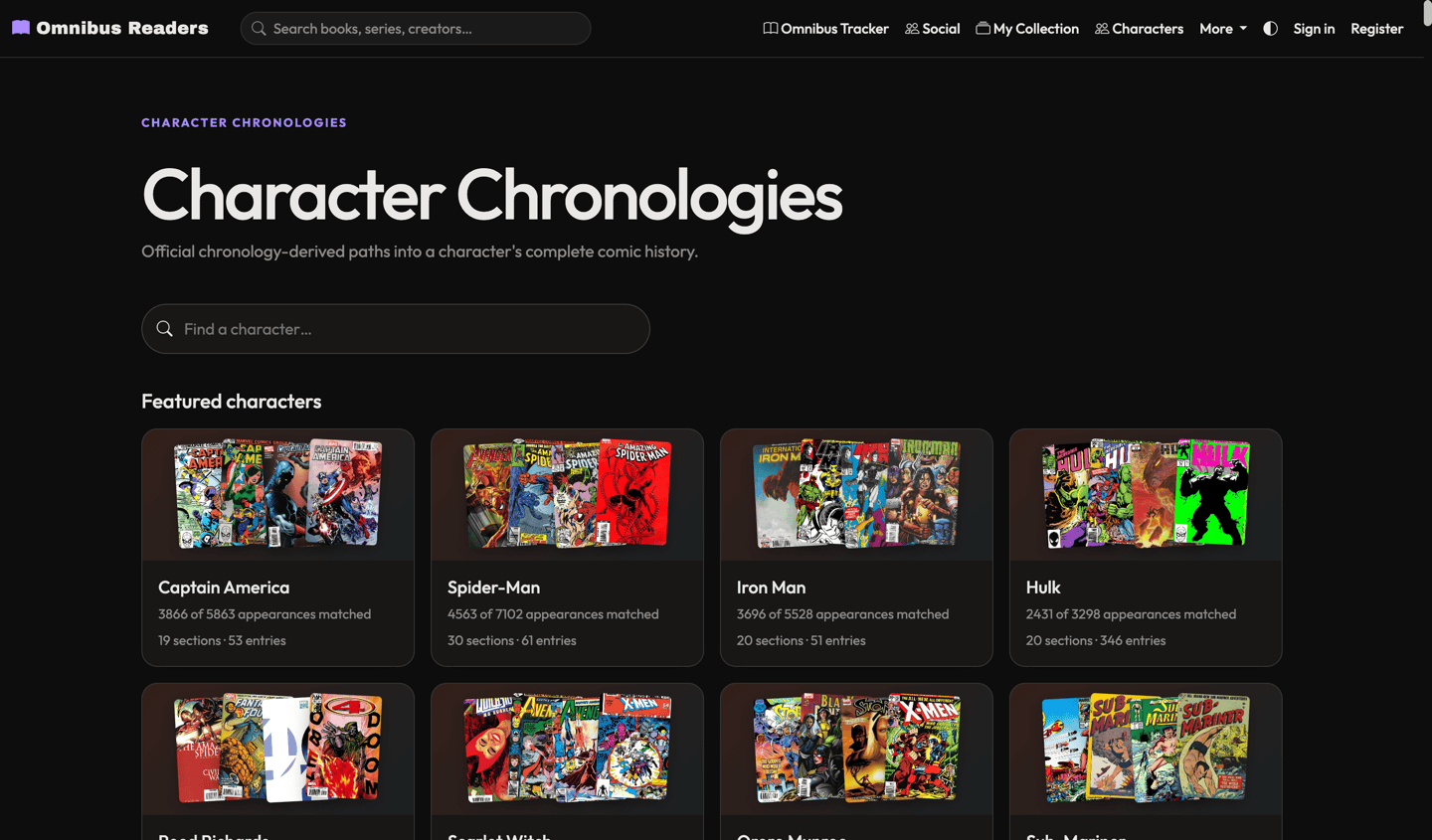
The biggest addition is Character Chronologies. Pick a character and you get a path through their whole comic history, in order — not a curated "best of", but the actual publication chronology, assembled from the Marvel Chronology Project and the Complete Marvel Reading Order and then reconciled against the catalog.
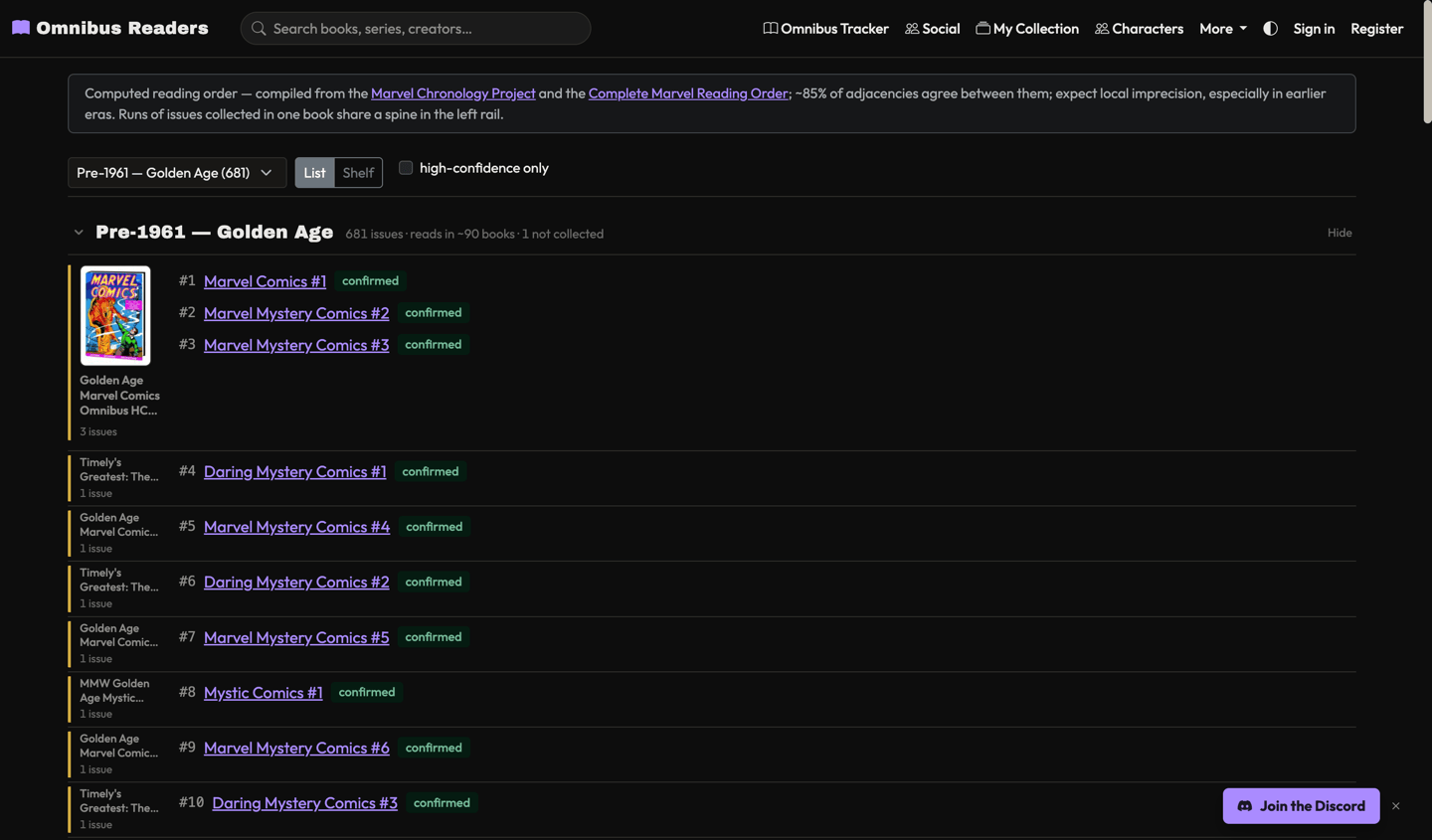
There's also the full Marvel reading order, broken into eras from the Golden Age forward. The useful part is the left rail: every run of issues that gets reprinted in one book shares a spine, so you can see at a glance that the next forty issues are one omnibus and not forty separate hunts. Sign in and you can filter to what you already own, jump to your next unread, or hide the entries where the two source chronologies disagree.
It's compiled, not hand-written, so it's honest about itself — roughly 85% of the orderings agree between sources, and the early eras are the loosest. The header says so rather than pretending otherwise.
Character pages got the matching treatment: every appearance, split by decade, filterable down to full appearances versus cameos and flashbacks, with a bar showing how much of it is on your shelf. A lot of quiet work also went into merging duplicate character records, so Iron Man is one character rather than four fragments of one.
Pages for the people who made them
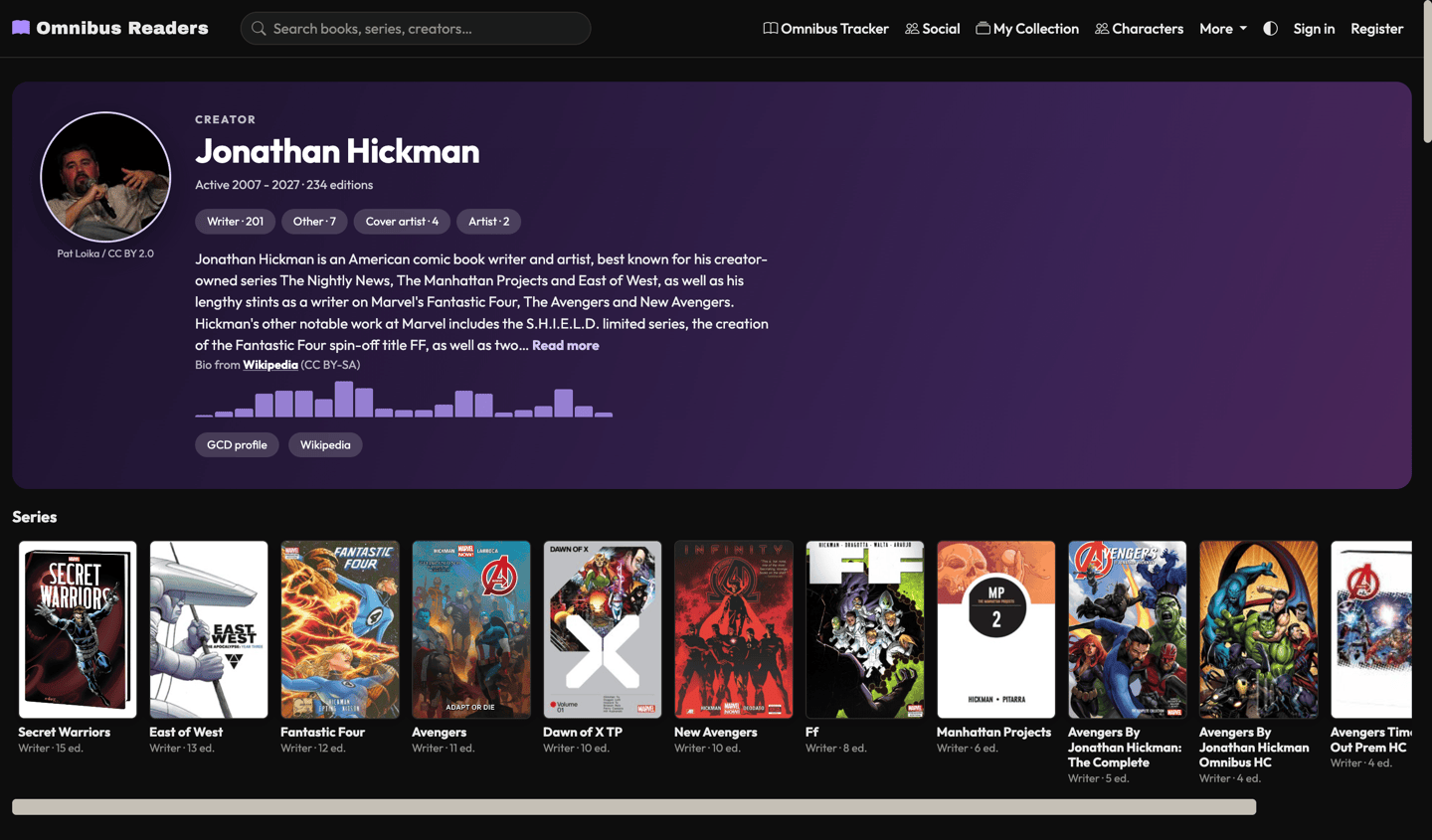
Creators have their own pages now. Each one carries a bio, a breakdown of what they actually did and how often (writer on 201 editions, cover artist on four), a year-by-year sense of when they were busy, and the series they worked on. It's a better answer to "what else did this person do" than a search box.
Single issues that describe themselves
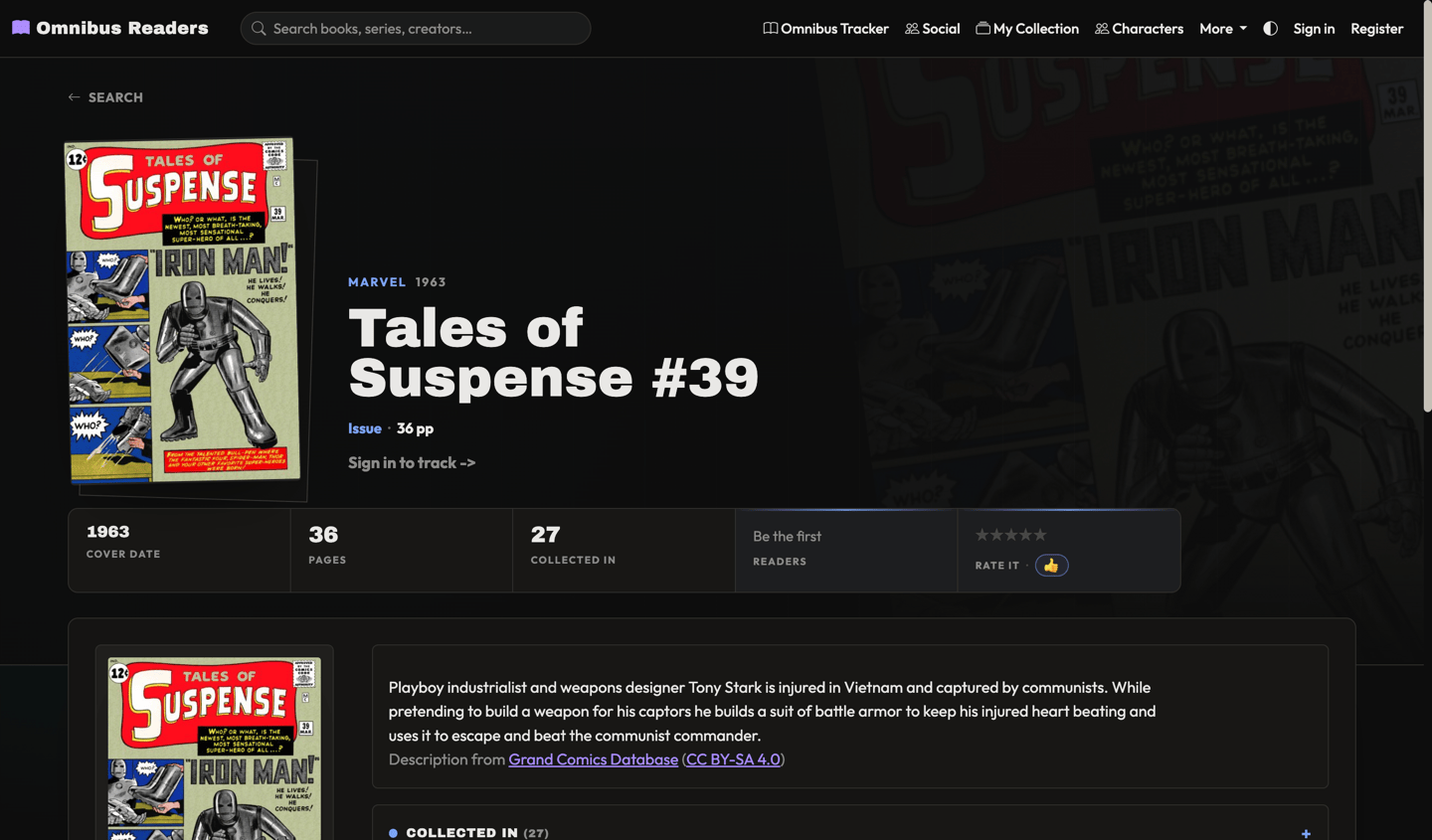
Individual issues used to be little more than a number in a list. They now carry synopses, page counts, cover dates, creators, characters, alternate covers, and — most usefully — the full list of collected editions that reprint them. Twenty-seven books contain Tales of Suspense #39; the issue page is where you find that out.
Behind that, editors picked up a real set of tools: a full-page record editor for editions and issues, the ability to merge and un-merge issues that got double-counted, direct editing of what a book collects, and a revertable history on everything. Trusted users can upload a cover when ours is wrong or missing. The point of all of it is that when something in the catalog is wrong, it can now be fixed properly instead of worked around.
Prices from more than one shop
Where-to-buy grew up. Editions now show prices from several retailers side by side — Alibris, InStockTrades, Cheap Graphic Novels, Panel Bound, DCBS and others — as a delivered price with shipping folded in, not a sticker price you have to mentally adjust. Each row shows the discount off cover, the condition, and when we last checked, because a great price from three weeks ago isn't a price.
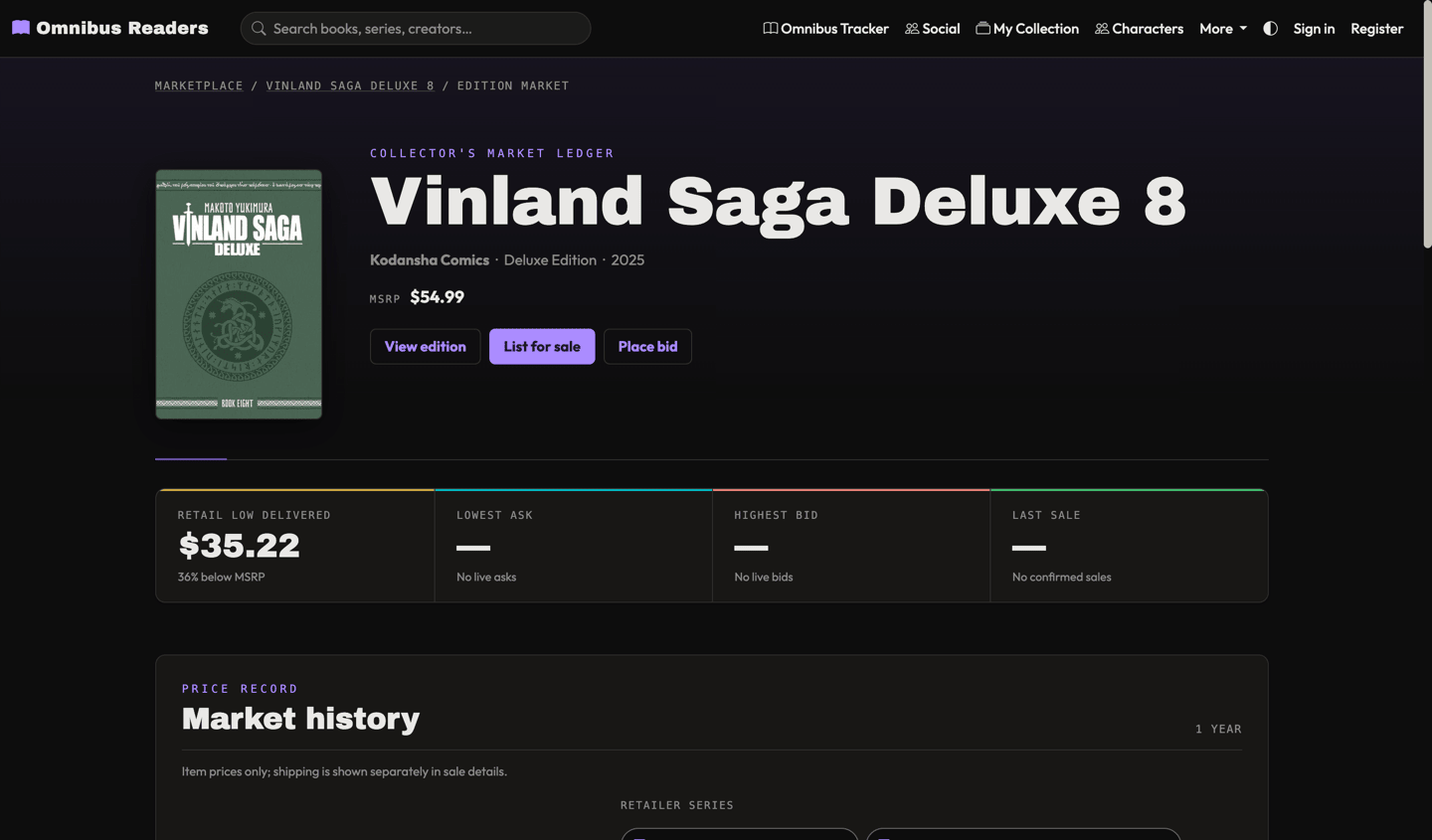
Every edition also has a market page: the retail low, the lowest ask and highest bid from readers here, the last confirmed sale, and a chart of how all of that moved over time. Wants and bids were merged into one list, so asking for a book and offering to buy it are no longer two separate things you have to remember.
The front page got redesigned
The Omnibus Tracker is the page most people land on, and it was overdue. It now has a proper masthead, a publisher rail so you can jump straight to Marvel or DC or Image, and three ways to look at the same shelf — by week, as a grid, or by final order cutoff. Paperbacks are a toggle rather than a separate trip.
It's also noticeably quicker. Long lists only render what's on screen, off-screen rows stop being laid out at all, and the whole thing animates when you switch views instead of snapping.
The duplicates are gone, too. Omnibuses that appeared twice because a variant cover looked like a separate book are now collapsed into one card — the same fix that stopped hardcovers and paperbacks getting folded into each other by mistake.
Everything else
Messaging got the management it was missing: mute a conversation, archive it, leave a group, edit or delete what you sent. Settings was rebuilt on the same design system as the rest of the site. The reading-log chat suggests follow-up questions instead of leaving you staring at an empty box. Posts on the feed show their full text rather than cutting off at 180 characters. And there's a Discord to join, plus a running note of what the hosting actually costs, if you've ever wondered.
Underneath, most of the month's effort went somewhere you'll never look: pages that used to scan the entire catalog on a cold start now don't. Search, issue browsing, reading orders, shelves, profiles and the social feed all had their slowest path taken out and replaced with something precomputed. Cover images got smarter about picking the real cover instead of a placeholder, and about spotting when two "different" books are the same book photographed twice.
Nothing on that last list is worth a headline. But it's the difference between a catalog that's technically correct and one you can trust at a glance — and that's the part that makes the rest of it worth building.